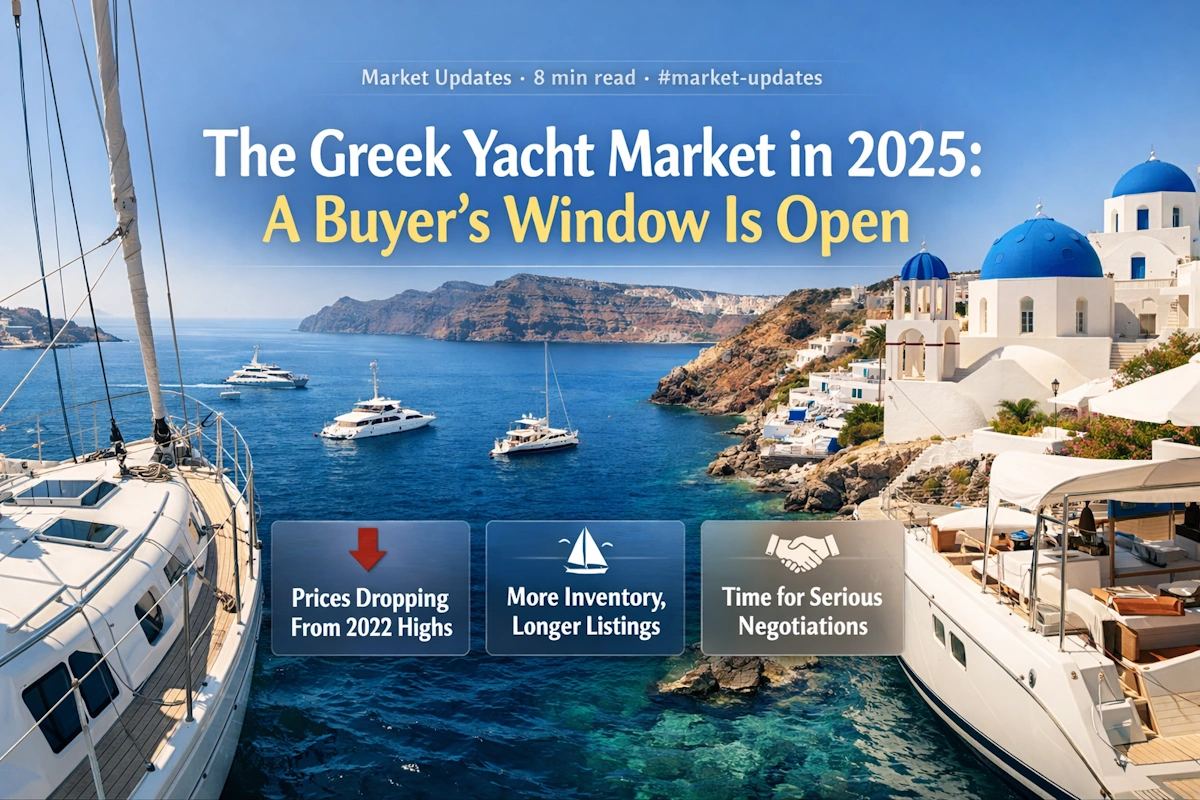
After three years in which post-pandemic demand sent prices sharply upward, the Greek yacht market has shifted meaningfully in favour of buyers. Inventory has risen, days-on-market have lengthened, and for the first time since 2021, serious negotiation is a realistic strategy.
Why the Market Is Shifting
The catalyst has been a combination of macroeconomic headwinds — rising interest rates across Northern Europe, a stronger euro affecting the key buying markets of Germany, the Netherlands, and the UK, and a modest softening of charter revenue expectations among investor-owners. Sellers who purchased at peak 2022 pricing are now listing at more competitive valuations to transact before summer.
The most significant movement has been in the 40–55 foot sailboat segment. Models from Bénéteau, Jeanneau, and Bavaria built between 2015 and 2020 are now transacting at prices 8–14% below their 2022 peaks. Well-equipped catamarans remain firmer, but even here the frenzied bidding of 2022–2023 has faded.
Where the Value Is
The Ionian marina belt — Lefkada, Preveza, and Corfu in particular — holds the deepest inventory of well-maintained cruising sailboats. Many are ex-charter vessels retiring from fleet service, presenting well-equipped yachts at keen prices. Careful survey work is essential here given usage levels, but the value is genuine.
For motor yacht buyers, the Saronic Gulf remains the strongest market. Prices have held better than in the sailboat segment, but the spread between asking and final transaction price has widened to an average of 7–8%, which represents real negotiating room.
What to Do Right Now
This window will not remain open indefinitely. Charter season demand typically reactivates the market in Q3, and sellers who don’t transact by August tend to hold through winter and relist at firmer prices in spring. Come with your financing in order, a surveyor identified, and a clear view of your flagging preference. Our brokers are available to guide you through all of this at no obligation.